Buying guide
Budget pocket knife buying checklist: what to verify
A practical checklist for choosing an affordable pocket knife by model identity, task fit, blade length, steel, lock type, maintenance, and DISPATCH examples.
As an Amazon Associate I earn from qualifying purchases.
Research basis: maintained product records and referenced background material. This page does not claim hands-on testing unless it documents that work explicitly. Editorial method.
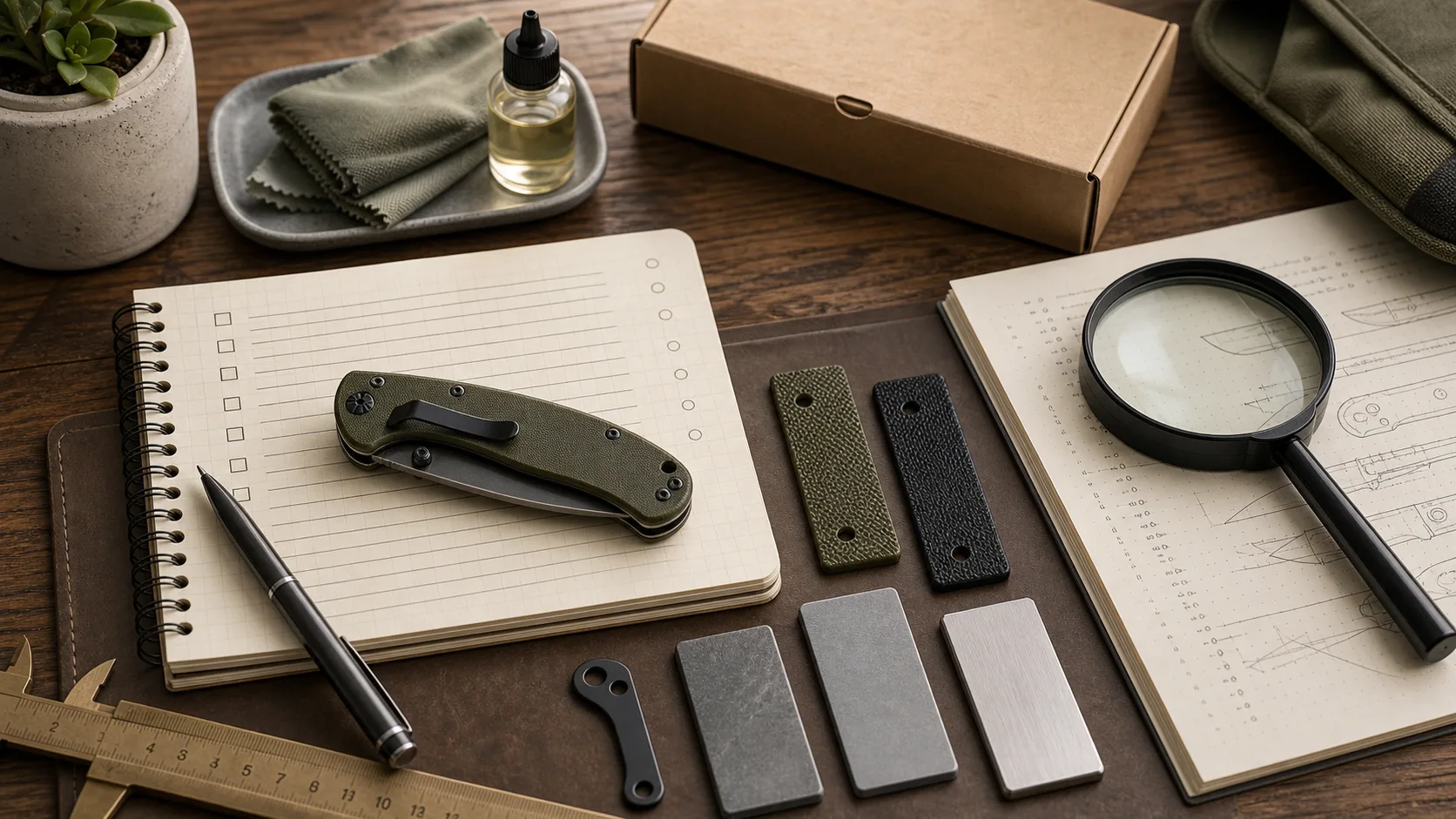
Quick answer
Before you compare prices, verify the knife. Confirm the exact model, blade length, steel, lock type, opening style, handle material, maintenance needs, and intended utility task. Product photos and hype words do not fill in missing specs.
If the task, size, or blade shape is still undecided, start with the how to choose a pocket knife guide. Return here once you know the type of knife you need and are ready to verify the exact live model.
| Pitfall | Why it matters | What to verify | DISPATCH example |
|---|---|---|---|
| Vague steel name | You cannot judge sharpening, corrosion care, or edge retention. | Steel listed in the live product details. | 3.54 inch 8Cr13MoV G10 model |
| Unclear opening style | Manual, assisted, and automatic wording can change legal and buyer fit. | Current listing language and local rules. | 3 inch drop point liner lock |
| Too much blade for the job | Longer blades add reach, but also control and local-rule questions. | Blade length and where you plan to use it. | 3.58 inch drop point G10 model |
| Shape chosen only for looks | A tanto or dramatic profile can add sharpening tradeoffs. | The cutting tasks and sharpening plan. | 3.54 inch tanto point model |
| Decorative model with missing specs | A giftable handle does not prove steel, lock, or blade length. | Live specs before treating it as a work knife. | Dragon pattern folding pocket knife |
The seven checks before buying
Use this checklist before opening a retailer page in a new tab:
- Exact identity: ASIN, product title, and model should match the knife you meant to buy.
- Blade length: compare it with your local rules, workplace rules, school, park, venue, and transit restrictions.
- Steel: understand whether the steel is easy to sharpen, more corrosion-sensitive, or simply not verified.
- Blade shape: choose drop point for general slicing; choose tanto only when the shape tradeoff is the reason.
- Lock and opening style: confirm the lock type and whether the live page describes manual, assisted, or anything more restrictive.
- Handle material: G10, metal, or decorative handles feel different when wet, dusty, cold, or used with gloves.
- Maintenance plan: know how you will clean, dry, oil, and sharpen it after cardboard, tape, cordage, or wet use.
If any of those are unclear, slow down. A budget knife with clear specs is a better buy than a dramatic listing that leaves basic questions unanswered.
Is a G10 handle worth choosing on a budget pocket knife?
Choose G10 when a textured handle helps with dusty garage work, light moisture, cold hands, or gloves. It is a practical handle material, but it does not prove that the blade steel, heat treatment, lock, hardware, or overall fit is good. Judge the complete knife rather than treating “G10” as a quality score.
The 3.54 inch 8Cr13MoV G10 model is one useful G10 example. Before buying, verify the live handle description, fasteners, lock type, blade length, and cleaning needs.
Best DISPATCH starting points
The 3 inch drop point liner lock pocket knife is the compact option. It fits buyers who mostly open packages, cut tape, trim cordage, or want a smaller tool that is easier to control around delicate contents.
The 3.54 inch 8Cr13MoV G10 folding pocket knife is the broader utility option. It is the model to check when you want one folding knife for a drawer, garage shelf, or camp bin, and you are willing to keep the edge clean and touched up.
The 3.58 inch drop point G10 folding knife suits cardboard panels, camp packaging, cordage, and gear repair. The tradeoff is more blade to control and more local-law detail to verify.
What to treat as a warning sign
Skip or pause on a listing when it relies on aggressive words, unclear steel, no lock explanation, no blade length, vague “survival” copy, or a photo that makes the knife look more capable than the specs support. Treat folding knives as adult utility tools and keep the comparison within ordinary cutting, maintenance, camping, and local-rule checks.
Decorative knives are not automatically bad. The Dragon pattern folding pocket knife can make sense as a style-led gift, but its blade length and steel are not yet fully verified. The live listing must answer those questions before it becomes a practical recommendation.
Recheck the live listing
Use the local product page as your comparison note, then verify the live retailer page. Product titles, specs, availability, shipping limits, restrictions, and seller wording can change.
Do not let star ratings, copied review snippets, or short-term price changes replace specification checks. If the model identity, blade length, steel, lock, or opening style remains unclear, stop before buying.
FAQ
What is the first thing to check on a budget pocket knife?
Exact identity. Confirm the ASIN, title, blade length, steel, lock type, opening style, and handle material before comparing style or price.
Is a decorative folding knife a bad buy?
Not automatically. It can be a good gift if the receiver wants the style and the practical limits are clear. It should not replace spec checks.
Should low price override unclear specs?
No. Unclear specs are a warning sign. A low-cost knife with clear steel, lock, and length is easier to judge than a flashy knife with missing details.
Which DISPATCH model should a beginner compare first?
Start with the compact drop point for package control or the 3.54 inch G10 utility model for broader everyday tasks. Move to larger or more specific shapes only when the job explains the choice.
Sources and verification
These external references support product identity, mechanisms, maintenance, sharpening, safety, or law-checking. Retail listings and local rules can change, so verify current details before acting.
Practical guides for choosing and caring for folding knives
Start with direct buying guides, material explainers, maintenance notes, and safety limits before choosing a folding knife.
How to choose a pocket knife for everyday utility
Find the shortest pocket knife for your everyday cutting task, then verify blade shape, lock, upkeep, local rules, and live DISPATCH model details.
3 inch vs 3.5 inch pocket knife: which should you buy?
A practical size comparison for compact and 3.5 inch DISPATCH folding knives, covering pocket comfort, cutting reach, maintenance, and local-law checks.
Folding knife lock types explained
A practical guide to liner locks, frame locks, axis-style locks, back locks, button locks, and what to inspect before ordinary utility use.
DISPATCH Amazon starter shortlist
Use these first picks to compare blade size, handle texture, lock style, and everyday utility tasks before checking final product details on Amazon.